
Top Reasons for Poor Replacement in Permanent Staffing
Author:
Date: 24-02-2026
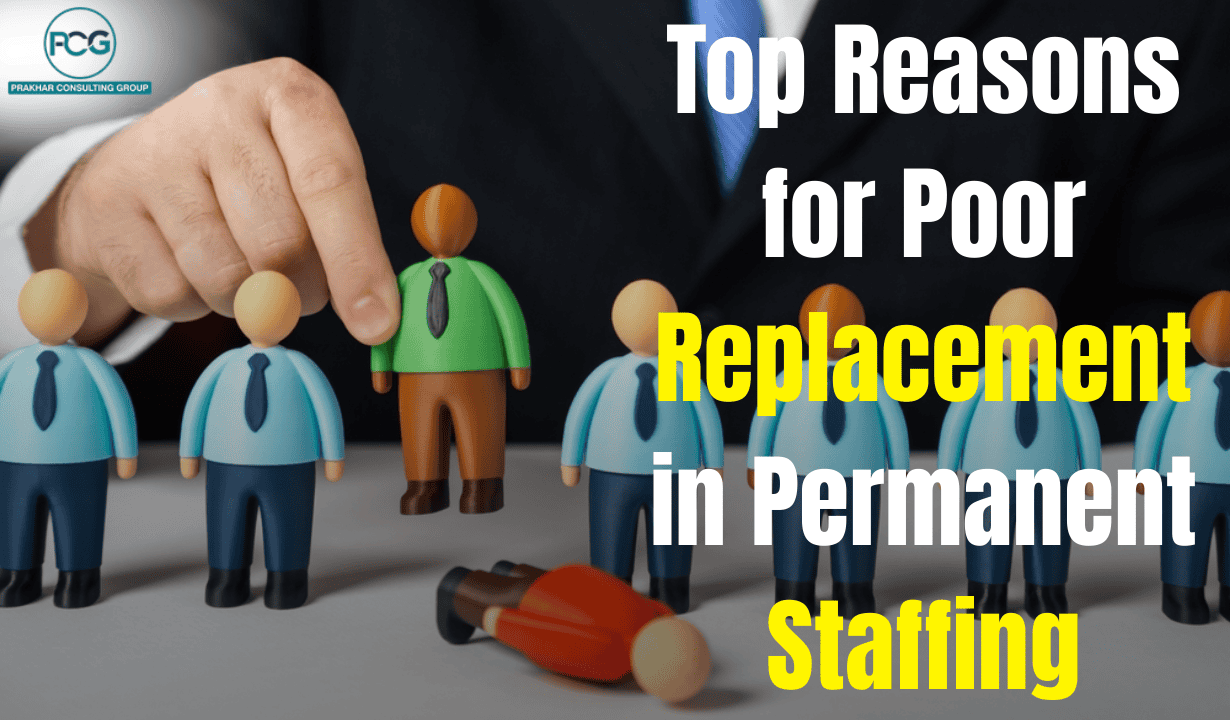
Many Indian founders and HR leaders share the same frustration. A role gets filled, but within months the employee leaves, forcing the hiring cycle to restart.
This constant replacement drains productivity, increases hiring costs, and slows business growth, especially for scaling companies. Permanent Staffing for Startups becomes risky when hiring decisions focus on urgency instead of workforce alignment.
In fact, most replacement failures originate from process gaps, not talent shortages. Companies that rethink hiring strategy early often reduce replacement cycles significantly and build long-term team stability.
Compliance Confusion Quietly Drives Early Employee Exit
Replacement often increases when compliance and onboarding clarity are inconsistent.
Frameworks aligned with the Ministry of Labour & Employment and EPFO show that delayed benefits activation or unclear policies reduce employee trust early. Many companies assume compliance is an HR backend task, yet it directly affects retention.
Here’s what the numbers reveal. Companies with unclear onboarding processes experience up to 18% higher resignation risk within the first quarter.
Expert Insight
Experts consider this a turning point where compliance is shifting from legal necessity to employee experience strategy.
- EPFO and ESIC activation timelines.
- Transparent probation evaluation frameworks.
- Structured onboarding within 30 days.
- Compliance-linked HR dashboards.
“A senior compliance consultant at EPFO explains that early transparency around benefits and policies stabilizes long-term workforce retention.”
Weak Hiring Systems Create Continuous Replacement Cycles
Poor replacement happens when hiring focuses on closing vacancies instead of building sustainable workforce systems.
Guidance frameworks shared by NASSCOM and SHRM India emphasize structured hiring funnels over reactive recruitment. A Manpower Consultancy in India such as Prakhar Consulting Group typically audits hiring workflows before sourcing begins.
According to 2026 reports, mid-sized Indian firms report 28% to 35% early-stage attrition when hiring processes lack structured evaluation checkpoints.
Most companies invest in sourcing tools but ignore workforce design. Faster hiring without alignment increases replacement risk.
- Three-stage hiring funnel: screening, behavioural fit, role alignment.
- Workforce planning linked to quarterly revenue forecasts.
- Attrition risk scoring before final offer.
- Cost-per-hire benchmarks tied to team productivity.
“According to HR policy advisors at NASSCOM, structured hiring systems reduce replacement frequency more than expanding recruitment channels.”
Over-Reliance On Automation Weakens Long-Term Hiring Decisions
Automation improves hiring speed but cannot replace strategic workforce planning.
Enterprises such as Tata Group and Infosys combine HR automation with human-led evaluation models. However, many growing businesses deploy tools without redesigning hiring strategy.
A 2026 trend analysis shows automation reduces time-to-hire by nearly 20%, yet replacement rates remain unchanged without leadership alignment.
Expert Insight
Most companies overlook that technology accelerates decisions, but does not improve judgment quality.
- Hybrid hiring workflows combining AI screening with leadership review.
- Workforce analytics dashboards.
- Decision checkpoints after each hiring stage.
- Attrition prediction based on behavioural indicators.
“HR transformation specialists at NASSCOM state that automation supports hiring efficiency only when paired with structured workforce planning.”
Role Misalignment Is The Hidden Reason Behind Failed Replacement
Replacement failures usually occur when job expectations change during the hiring journey.
Research insights from LinkedIn Talent Solutions show that unclear role definitions increase offer dropouts and early exits. Most companies overlook that hiring managers redefine requirements mid-process, confusing candidates.
A 2026 trend analysis shows Indian services firms face 25% to 30% offer rejection when job scope evolves after interviews begin. Senior Leadership Hiring Services at Prakhar Consulting Group focus on defining success metrics before hiring starts, reducing replacement risk.
- Role clarity workshops before sourcing
- Interview panel alignment frameworks
- Workforce mapping against project pipelines
- Leadership expectation matrices
“According to workforce advisors at SHRM India, role clarity before hiring is one of the strongest predictors of retention.”
Conclusion
Poor replacement in permanent staffing is rarely caused by a lack of talent. Instead, it reflects gaps in hiring systems, compliance clarity, and leadership alignment. Indian companies that redesign workforce planning reduce hiring fatigue and stabilize growth. For founders and HR leaders navigating complex expansion, Prakhar Consulting Group provides structured advisory that turns permanent hiring into a long-term business advantage rather than a recurring operational challenge.
FAQs
Q1. What causes repeated replacement in permanent staffing?
Unclear hiring strategy, weak onboarding, and changing role expectations often lead to early exits.
Q2. Why do startups struggle more with permanent replacement?
Startups prioritize speed, which can overlook workforce planning and compliance alignment.
Q3. Does automation reduce replacement risk?
Automation improves efficiency but cannot replace structured leadership decisions.
Q4. How important is compliance in permanent staffing?
Compliance clarity builds employee trust and reduces early resignation risk.
Q5. What role does Prakhar Consulting Group play?
Prakhar Consulting Group provides workforce advisory, senior leadership hiring, and structured manpower consultancy solutions across India.